

CF-Device rates its VCM terminals from −30°C, which is the entry requirement here: cold chain logistics carries a strict, non-negotiable requirement that ordinary freight doesn’t: cargo that leaves temperature range even briefly can become unsellable — or unsafe. Pharmaceuticals, vaccines, and perishable food all depend on an unbroken record of “this shipment stayed within range, the entire way.” That record starts at the vehicle terminal.
TL;DR
- Temperature excursions must be caught in real time, not discovered hours later on paper logs
- Terminals need wide operating temperature range (-20°C to 60°C), dual-SIM connectivity, GNSS routing
- The vehicle terminal is the compliance record for every shipment, not just a tracking device
- Real-time alerting allows rerouting to backup cold storage before product is compromised
The Problem
Cold chain vehicles operate in the same extreme conditions as the cargo they carry — refrigerated trailers cycle between a warm loading dock and sub-zero cargo holds dozens of times per shift, and the terminal mounted in the cab or reefer unit has to survive that cycling without failure, while still reliably transmitting location and status data. A consumer tablet fogging up, freezing, or losing signal at the exact moment cargo temperature excursion needs to be logged defeats the entire point of tracking.
How Rugged Terminals Solve This
A terminal built for cold chain duty combines three capabilities that consumer devices can’t match:
- Wide operating temperature range, rated to function reliably from around -20°C to 60°C, so the device performs the same whether it’s sitting in a frozen trailer or a sun-baked dashboard during a summer delivery route — the same certification standard covered in our IP67 & MIL-STD-810 durability guide
- Continuous 4G/5G connectivity with dual-SIM failover, ensuring GPS position and temperature-sensor data keep transmitting even when a route passes through areas with weak coverage from a single carrier
- GNSS-guided routing, giving dispatch real-time visibility into whether a truck is on schedule to make a delivery window before product quality is compromised by time in transit
- These same continuous-duty demands show up in Smart Transportation: DMS & AVM 360°, where multi-shift passenger routes place similar reliability requirements on the terminal.
Paper Logs vs. Real-Time Terminal Monitoring
| Paper/End-of-Route Logs | Real-Time Terminal Monitoring | |
|---|---|---|
| Excursion detection | Hours after it happened | Within minutes |
| Corrective action | None possible — already delivered | Reroute to backup cold storage |
| Compliance record | Manual, gaps possible | Continuous, automatic |
| Connectivity dependency | None | Dual-SIM failover for reliability |
Real-World Example
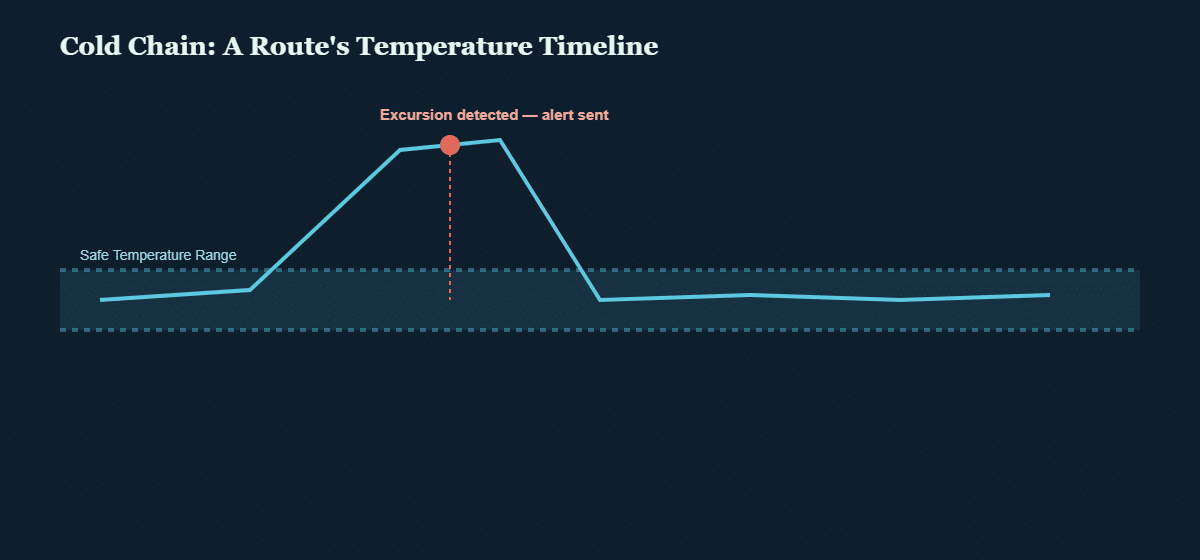
A regional cold chain distributor delivering vaccines to rural clinics previously relied on paper temperature logs checked at the end of each route — meaning any excursion was only discovered hours after it happened, sometimes after the product had already been administered. After equipping the fleet with rugged terminals integrating temperature sensor input and continuous cellular reporting, dispatch could see an excursion alert within minutes of it occurring, allowing the driver to be rerouted to the nearest backup cold storage point before the shipment was compromised — the same real-time alerting logic covered in our MDM remote diagnostics guide.
The Solution
For cold chain fleets, the vehicle terminal isn’t just a tracking device — it’s the compliance record for every shipment. Specifying rugged, wide-temperature hardware with reliable continuous connectivity turns temperature monitoring from a reactive paper trail into a real-time operational safeguard. Cold chain is one segment of the broader challenge covered in rugged terminals for logistics and transportation fleets, and shares the same driver-safety considerations covered in Mining: Rugged Terminals for the Harshest Working Environment where extreme temperature and connectivity gaps are also central concerns.
Common Questions
What temperature range should cold chain terminals be rated for?
Around -20°C to 60°C covers most refrigerated transport scenarios, from frozen cargo holds to hot summer dashboards.
Is dual-SIM necessary, or is single-carrier connectivity enough?
Dual-SIM failover matters most on routes crossing regions with inconsistent single-carrier coverage — for fixed urban routes with reliable signal, it’s less critical.
Does the terminal need a separate temperature sensor, or does it have one built in?
Typically the terminal integrates with the trailer/reefer unit’s existing temperature sensors via a data connection, rather than sensing temperature itself.
How fast can dispatch react to an excursion alert?
With real-time reporting, alerts typically reach dispatch within minutes, enabling rerouting decisions before product quality is compromised.
The base in-cab hardware decision underneath any cold-chain application — voltage range, CAN access, and screen size against cab sightlines — is covered in our truck computer specification guide.
Where the decision is which specific unit to fit rather than which capability to specify, ten models used in trucking are compared in the best tablets for truck drivers.
Interested in specs or a quote? Contact our team to discuss cold chain terminal requirements for your fleet.