

A tablet for logistics is more than a screen: in logistics the vehicle terminal is the link between a truck on the road and the systems tracking that shipment in real time. CF-Device’s VCM range is specified for this role, with GNSS tracking, CAN-bus diagnostics and, on selected models, dual-SIM connectivity and DMS driver monitoring.
TL;DR
- GNSS tracking, proof-of-delivery, CAN-bus diagnostics and driver monitoring can converge on one terminal; which functions a model offers depends on the model
- Dual-SIM connectivity (on the VCM V10-2) reduces the risk of hours-long tracking gaps on long-haul routes
- IP65 or higher protection and wide-voltage input are baseline requirements, not premium upgrades
- The terminal is increasingly a fleet-wide operational decision, not just an IT purchase
What a Tablet for Logistics Actually Manages
Real-time location tracking via GNSS feeds fleet-management and route-optimisation platforms; proof-of-delivery and documentation often run through the same driver-facing interface; vehicle health and diagnostics via CAN bus flag maintenance needs before they cause a breakdown mid-route; and DMS Driver Monitoring adds safety oversight for long-haul routes where fatigue risk climbs with hours on the road (DMS is listed on the VCM M10; confirm other models).
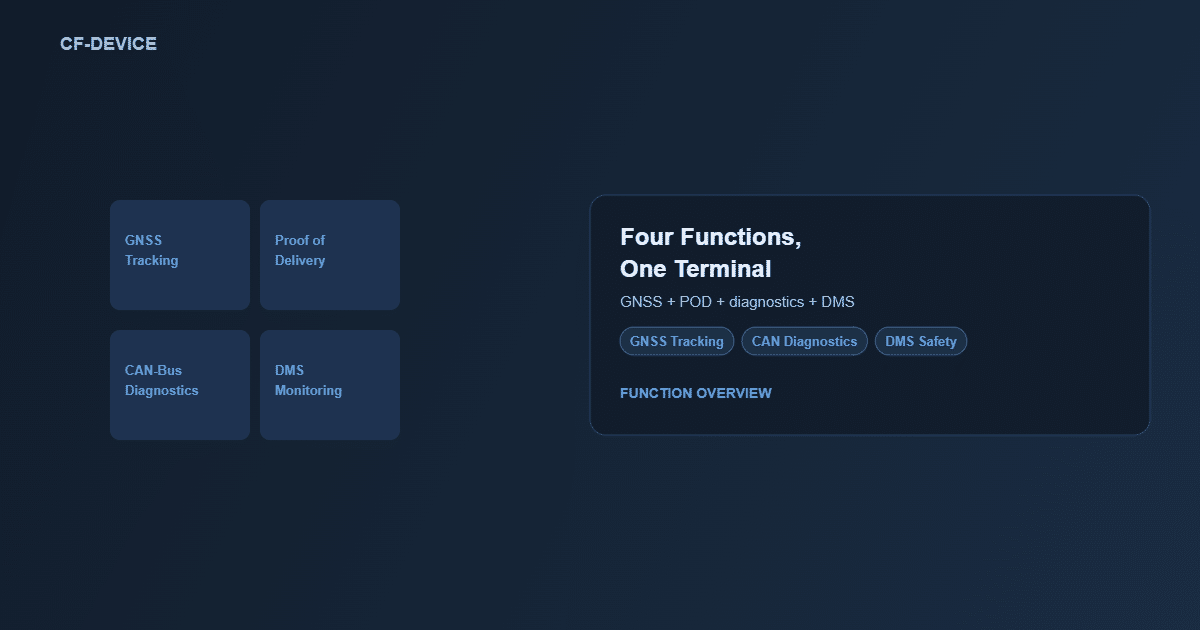
The Four Functions, Side by Side
| Function | What it solves | Failure without it |
|---|---|---|
| GNSS tracking | Real-time location for dispatch and customers | No visibility into delays |
| Proof-of-delivery | Digital signature or photo capture | Paper disputes, lost records |
| CAN-bus diagnostics | Early maintenance warnings | Roadside breakdowns |
| DMS monitoring | Fatigue and distraction alerts | Preventable driver incidents |
Rugged Tablets for Transportation and Logistics: Other Names for the Same Question
Buyers search for a tablet for logistics, rugged tablets for transportation and logistics, a logistics and transportation mobile terminal, a delivery driver tablet and a cargo tablet and a logistics vehicle terminal. They describe one decision: a fixed, vehicle-powered terminal for the cab, or a handheld for the person who walks the delivery. Many fleets end up with both, a mounted terminal for dispatch and tracking and a handheld for proof of delivery. What a mobile data terminal is, and why fleets adopt one, is explained in mobile data terminals in fleet logistics.
Why Connectivity Redundancy Matters
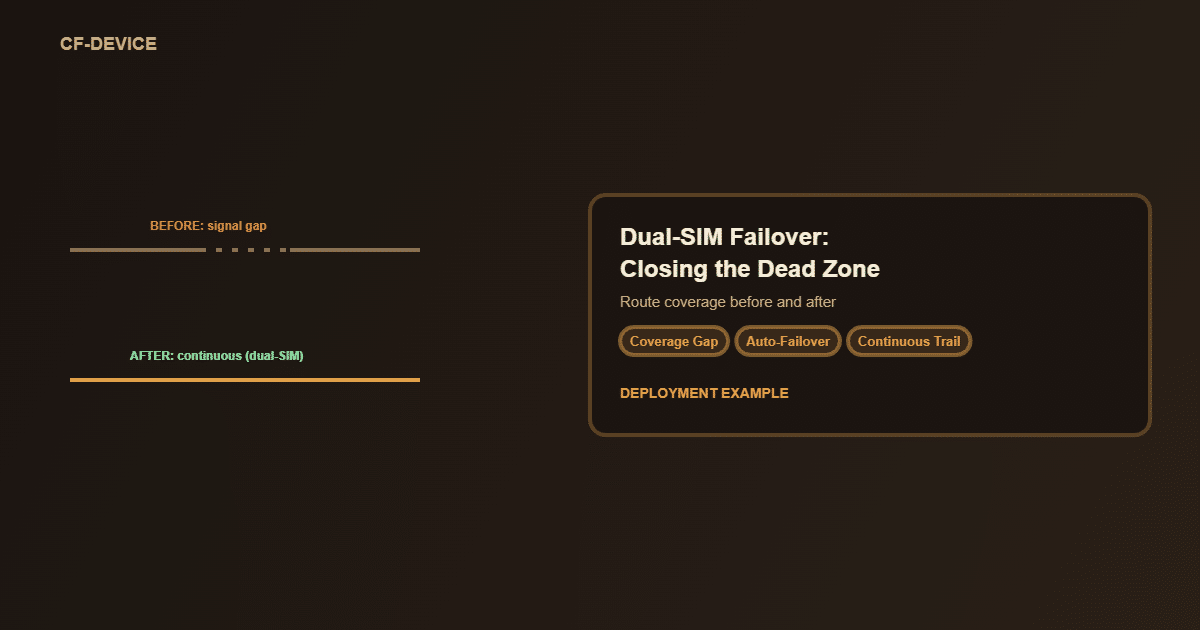
A single dropped 4G connection on a long-haul route can mean hours of lost tracking data, the same risk covered in Cold Chain Logistics Tracking, where a connectivity gap becomes a compliance problem, not just an inconvenience. Dual-SIM connectivity, as on the VCM V10-2, reduces that risk by letting a second carrier take over when the first drops.
A Deployment Example
Consider a regional freight carrier running interstate routes that loses tracking visibility for 20 to 30 minute stretches where its primary carrier has weak coverage, enough to trigger customer-service calls asking where a shipment is. After switching to dual-SIM terminals that fall back to a second carrier in those same dead zones, the visibility gaps close almost entirely, and the fleet stops fielding “where is my truck” calls during exactly the route segments that used to go dark. This is an illustrative scenario rather than a customer case study.
Integrating with TMS and ELD Systems
Most logistics operators already run a transportation management system (TMS) or electronic logging device (ELD) for compliance. The terminal’s role is feeding accurate, real-time data into these systems rather than operating as an island. A terminal whose GNSS and diagnostic data does not export cleanly into the existing TMS or ELD stack creates duplicate data entry rather than eliminating it, which is why integration compatibility should be confirmed before hardware selection, not discovered after rollout. Which platforms CF-Device hardware runs on is set out in rugged tablets compatible with fleet management platforms.
Not Every Asset in a Logistics Fleet Needs a Terminal
Logistics is the one industry where the fleet is rarely a single class of vehicle. A carrier running 30 tractors typically also has 60 trailers, a yard full of swap bodies and a handful of reefer units, and the tractor and the trailer have opposite requirements. The tractor has a driver who needs dispatch, proof-of-delivery and hours logging on a screen. The trailer has nobody inside it at all; what the operation needs from it is location, dwell time, and whether the reefer is holding temperature.
Specifying one device class across both wastes money in one direction and creates a gap in the other. CF-Device’s guidance to logistics operators is to split the fleet by whether a person works inside the asset, then feed both device classes into the same platform so the dispatcher still sees one map rather than two. How that split works asset by asset is set out in fleet tracking hardware: GPS trackers vs vehicle terminals.
Rugged by Necessity, Not Preference
Commercial vehicles rack up more operating hours and rougher conditions than passenger cars. Vibration, temperature extremes and long duty cycles all shorten the lifespan of consumer-grade tablets rapidly. IP65 or higher protection and wide-voltage power design are not premium features here; they are the baseline for hardware that has to survive a multi-year deployment.
What the Terminal Does Not Solve on Its Own
A terminal reports data faster and more completely than manual processes, but it does not fix a routing plan that was wrong to begin with, or a maintenance schedule nobody has assigned to act on CAN-bus alerts. The hardware surfaces the information; a dispatcher, safety manager or maintenance coordinator still has to close the loop on what it reports. Logistics operators who treat the terminal as a complete solution rather than the data layer of one tend to under-realise its value.
The Bigger Picture
As logistics operators adopt more real-time tracking and compliance requirements, the vehicle terminal is increasingly the single point where positioning, communication, diagnostics and safety monitoring all come together, a shift covered in more depth in Fleet Management: One Terminal, Full Operational Visibility, making the choice of hardware a fleet-wide operational decision, not just an IT purchase. Once that decision reaches the shortlist stage, ten terminals and rugged tablets used across road, transit and municipal fleets are compared brand by brand in the best mobile data terminals for fleets.
Which Logistics Guide Should I Read Next?
Pick the next guide by the question you still have open:
| If your question is… | Read |
|---|---|
| Tracker or terminal for each asset? | Fleet tracking hardware |
| What does the in-cab terminal need for hours logging? | Tablet for ELD logs |
| Which terminal for a truck cab? | Truck computer: in-cab terminal guide |
| Which models do trucking fleets use? | Best tablets for truck drivers |
| What about temperature-controlled loads? | Cold chain logistics terminals |
| How do I manage the terminals? | MDM remote device management |
Common Questions
Does dual-SIM add ongoing cost for a fleet already paying for one data plan?
Yes. It requires a second carrier plan, but for long-haul routes where tracking gaps cost more in lost visibility and compliance risk, the added cost is usually justified.
Can one terminal really handle tracking, diagnostics and driver safety simultaneously?
On terminals with enough onboard processing, yes. This is the same integrated-platform approach covered in One Tablet, Four Systems. Confirm the combination for the model you choose.
Is IP65 sufficient for logistics fleets, or is IP67 needed?
IP65 is generally sufficient for road-going logistics vehicles; IP67 becomes more relevant for off-road or wash-down environments. See our IP65 vs IP67 guide.
How quickly does a dual-SIM terminal fail over to the second carrier?
Failover speed depends on the specific hardware and network configuration, so ask for the figure for your model and carriers rather than relying on a general number.
Does the terminal need custom integration work to connect with an existing TMS?
Usually some configuration is needed, but terminals supporting standard data export formats integrate with many TMS and ELD platforms without custom development. Confirm compatibility before purchase.
Where does the terminal sit in a logistics fleet management stack?
Logistics fleet management is usually bought as software (a TMS, an ELD provider, a routing engine) and the terminal is treated as the thing that displays it. CF-Device’s position is the opposite: the terminal is the only component that touches the vehicle, the driver and the cargo at once, so it is the data source the rest of the stack depends on. A routing engine fed by a phone in a cradle produces a different quality of plan than one fed by a fixed terminal reading CAN bus and GNSS on the same clock.
Where the fleet also runs electronic logging on the same in-cab unit, the power, mount and connectivity requirements tighten further, covered in our guide to specifying a tablet for ELD logs. Fleets weighing specific models rather than the category as a whole will find ten units used in trucking compared in the best tablets for truck drivers.
Interested in specs or a quote? Contact our team to discuss logistics fleet deployment.